Episode Transcript
[00:00:02] Speaker A: This is our musical reaction breakdown and commentary analysis of this song. Under Fair Use, we intend no copyright infringement and this is not a replacement for listening to the artist's music. The content made available on this podcast is for educational and informational purposes only, notwithstanding a copyright owner's rights under the Copyright Act. Section 107 of the Copyright act allows limited use of copyrighted material without requiring permission from the rights holders for purposes such as education, criticism, comment, news, reporting, teaching, scholarship and research.
These so called fair uses are permitted even if the use of the work would otherwise be infringing. Now onto the Roc Roulette Podcast. Enjoy.
[00:01:03] Speaker B: Foreign.
[00:01:14] Speaker C: Welcome back to another episode of rock roulette podcast. That's right, the crazy ass podcast. It took over 2000 albums. Stuck them in a list, stuck them in a wheel and every other week we spin the wheel. She picks a record for us when we go through her track by track, we talk about the music, the lyrics, the production, the melody and the arrangement and we give it scores. Just a bunch of friends who love music, who want to do a pod and everyone who takes this trip of discovery and rediscovery with us. We really want to thank you. Let us know what you like, what you don't like. Give us a song for the new Bets. I think last week we had a suggestion and it turned out pretty well. Keep them coming and suggest an album for the mama wheel. We try to keep it. Tonight we are a foursome which I can't even remember the last time it happened. We have Frank.
[00:01:57] Speaker B: My name is Frank.
And I'm sexy foreign.
[00:02:14] Speaker C: Ladies and gentlemen from the depths, from the furthest reaches knocking on dead store we have Steve back. Stephen, behave yourself.
[00:02:25] Speaker D: Steven, behave yourself.
Howdy.
[00:02:28] Speaker C: We have Mark. Oh hi Mark.
[00:02:30] Speaker D: What's up guys?
[00:02:31] Speaker C: And I'm sad. Ciao buena.
Last week we wrapped up Twisted Sister. Come out and play. In my big opinion was the heavier songs were the better songs. I think that they do that stuff pretty well. The musicianship was pretty good. The soloing was good, the drumming was good. I think the songs where they tried to make it more single like didn't work for me. It was a little too polished and the COVID didn't work for me. I think again, the album before the two hits still sounded raw, whereas the stuff here that made singles didn't sound as raw to me. But the stuff that was raw was pretty good. Mark, what was your overall take?
[00:03:05] Speaker D: I thought I hated that album for 40 years. It's not as bad as I remember. Solos were good. I Still don't like Leader of the Pack. I don't think that should have been a single whatsoever. But I understand when you have a cover like that, I think you use it because you think it's the easy path to hit song. But it didn't really work for me. It wasn't bad. I just don't think it was something they should have done. Otherwise, it was better than I remembered.
[00:03:27] Speaker E: Yeah.
[00:03:27] Speaker C: I mean, I didn't realize the girl died. That's how much I was paying attention to it.
Frank, what was your overall take?
[00:03:34] Speaker F: I would do Sam. I think that the. The heaviest songs are the better ones. I feel that if the entire album was arranged differently, it would have a better hit than the. I think Mark said what? Oh, 500,000 that sold.
[00:03:46] Speaker C: 500,000.
[00:03:47] Speaker F: 500,000. It was one of those. It's Twisted Sister. You want to like it more than you're listening to. But at the end, I think a lot of those heavier songs saved the album for me, so I did enjoy it.
[00:03:56] Speaker C: Steve, any experience with Twisted Sister come out and play the album?
[00:04:00] Speaker G: None whatsoever.
[00:04:01] Speaker C: I had a feeling. I didn't either. I'll be honest with you. I went in completely blind. You can skim through it. I think there's about four songs, I think, that were heavier and they stood out. I think they do that well. Check it out. Tonight is a special episode.
It is our four year anniversary. I don't know if you can believe it. I don't know if anybody out there even knows.
I'm so glad to have Steve back for this, which is awesome.
[00:04:41] Speaker A: Celebrate.
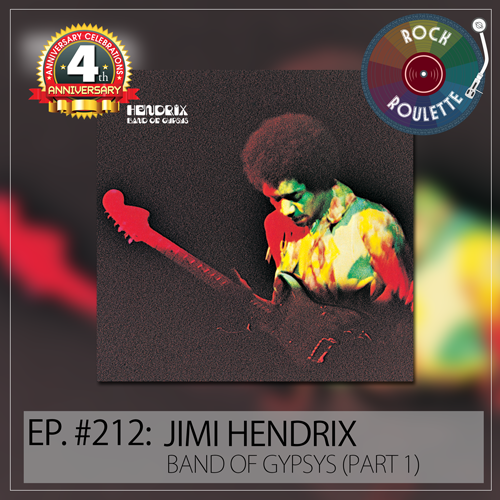
[00:04:44] Speaker C: Clearly that was for Steve. And guys, the three of us that are usually on the podcast, if this podcast garners more listens, clearly we know what the secret sauce is. Clearly it's Steve. It's our four year anniversary, which is awesome. We've been doing this for four years. It doesn't feel like it at all. And keeping with tradition, we are going to do probably, Mark, you would say the last technical new release by Jimi Hendrix, which was Band of Gypsies.
[00:05:07] Speaker D: Yeah, I think this is the last one. We weren't sure if we're gonna do it, but most of you guys haven't heard it. I think it's a good thing to do. Even though it's live, it's a record that a lot of people like and there's a couple songs on there that are big songs for him. I thought it was a good idea.
[00:05:21] Speaker C: No, I'm down with it. I don't think I know anything from here unless I just thought it was another Jimi Hendrix song and didn't know that it was from this era. But I'm absolutely cool with that. Before we get to Band of Gypsies, we get to the new Bets and the Baby Wheel.
[00:05:34] Speaker F: In a world where new music is not easy to find.
[00:05:41] Speaker B: Welcome to New Bets.
[00:05:53] Speaker D: Okay, here's the new Bets Wheel.
[00:06:08] Speaker C: Marilyn Manson, Exit Wound.
I know he had a new album out. I haven't heard anything from it, though.
[00:06:13] Speaker D: I wasn't a huge Marilyn Manson fan back in the day. I think I like it more now than I did actually, at the time.
[00:06:19] Speaker C: I never really listened to it, so I can't really say.
[00:06:22] Speaker D: You've never heard Beautiful People?
[00:06:23] Speaker C: No, I'm saying other than the hits. That's what I'm saying. The hits were okay. I never listened to it saying, oh, I'm gonna buy this. Steve, are you a fan at all or no?
[00:06:31] Speaker G: Nope, can't say that I am. I know the couple hits from the radio, but that's about it.
[00:06:35] Speaker C: What about you, Frank?
[00:06:36] Speaker F: The same. I just know some of the hits that he had on the radio. So it's not something that I would sit up and wait until the release of the album or go stand in line for tickets to go catch a show.
[00:06:47] Speaker D: Basically, we're all just hits, people. That's all we know.
So here it is. Exit Wound by Marilyn Manson.
[00:07:02] Speaker B: Sam.
The eyes of the vulture upon me the whispering of leeches in my ear Corner ventriloquist scratched his name across my wrist. Paparazzi starting to cheer.
Take your picture at the scene of the crime.
We got your victory, we made up your mind.
Shut off the spotlight. Whose God will you be?
Will they want you if your hands are clean?
Can't stop the bleeding, I'm not healing soon.
One who lives inside of the tongue Tells the altered voice what to say. Hey, ballerina, bayonet slice us up with pirouettes. Mouth is shut on hand grenade take your picture at the scene of the crime.
We got your victim and we made up your mind.
Shut off the spotlight. Whose God will you be?
Well, they want you if your hands are clean.
Can't stop the pain and I'm not healing soon you shot the world. I am that exit world.
You shot the world. I am the exit wound.
[00:10:39] Speaker G: Heal.
[00:10:44] Speaker B: Can't stop the bleeding, I'm not healing.
Can't stop the bleeding I'm not healing.
[00:11:27] Speaker C: Wasn't too bad. I wish the drums were a little bit heavier. Steve, what do you think?
[00:11:30] Speaker G: Wasn't bad. Trying to think of what it Was it definitely reminded me of another song or two that I've heard before.
[00:11:37] Speaker D: But overall, bad.
[00:11:39] Speaker C: Mark, what'd you think?
[00:11:40] Speaker D: Surprisingly sounds like the other stuff. Well, he feels like he hasn't really left a big hole and he changed his style or anything. I thought it was fine. I don't know when he last hit a record. I don't know his discography enough to know that, but I don't think he's done stuff for a while. From what I remember.
[00:11:54] Speaker C: I don't know either. Frank, what do you think?
[00:11:56] Speaker F: Yeah, it sounds pretty much what I've heard in the past.
There's nothing unique about the song. It sounds. What does Mark usually say? Very canned, very scripted, very on brand.
[00:12:09] Speaker C: Basically what you're saying is it sounded like Marilyn Manson.
[00:12:11] Speaker F: Yep, it sounded like pretty much all his other stuff.
[00:12:14] Speaker C: Which isn't a bad thing if you like it, right?
[00:12:16] Speaker F: Yeah, exactly. Very formulaic. And if you like it, then great.
[00:12:19] Speaker D: The screaming was pretty good. I'm surprised he still can do that.
[00:12:21] Speaker C: Yeah, I'm good with screaming. I like some scream in my songs. I don't mind it.
[00:12:25] Speaker D: Well, if you guys like it or you don't like us, hit us up on social media and let us know. And let's rubber stamp it. Here we go.
[00:12:32] Speaker F: In a world where new music is
[00:12:36] Speaker D: not easy to find, welcome to new bets.
[00:12:51] Speaker C: Mark, I will hand the mic over to you because I think you can do the. Oh, shit.
[00:12:57] Speaker D: Uh oh.
Who could that be?
[00:13:01] Speaker C: Our phone still works.
[00:13:04] Speaker D: I didn't know what even still worked.
[00:13:06] Speaker C: Yeah, somebody's gotta answer it.
[00:13:07] Speaker D: Hello?
[00:13:17] Speaker H: Hello? Hey, man, is this Rock Roulette? Yeah. Yeah, I know you're probably wondering how I'm calling you.
Let's just say the afterlife is pretty good phone service. But listen, man, I had to call. Four years. Four years of spinning that crazy wheel, picking records, arguing about music like, and somehow making it this far without the whole thing completely exploding.
Like, music is a strange thing, man. A song can travel through time. It can reach somebody decades after it was made. Like it can make you feel something. You didn't even know you were carrying it, you know? And that's what you guys have been doing. You take the records, you spin the wheel. You never know what's coming next. So from wherever I am right now in the. Believe me, the view is pretty cosmic, man. You know, I want to say congratulations to Rock Roulette on four years. Happy four year anniversary, Rock Roulette. And I'll see you on the other side.
Oh, and one more thing, you guys didn't happen to review Band of Gypsies yet, did you?
Because I've got some notes. Peace. Now, if you will excuse me, I must be on my way.
[00:14:31] Speaker C: That was cool and creepy, man. How the did he know?
[00:14:34] Speaker D: He's up there. That's how he knows.
[00:14:35] Speaker C: Yeah, I guess it's true.
[00:14:37] Speaker D: What's he gonna do for five years since we're not gonna be doing his records anymore?
[00:14:40] Speaker C: Oh, man. I know we gotta get another call from Hendrix next year, but maybe he'll call us about being disappointed or being thankful that we don't put him on the show.
Thanks for not putting me on the show, guys.
[00:14:53] Speaker E: All right.
[00:14:54] Speaker D: Well, that was freaky. Anyway, so this is Band of Gypsies. A little backstory. This is Jimi Hendrix. Billy Cox, who played with him at Woodstock, and Buddy Miles, who's a drummer, singer, soul player. And from what I've been reading, a lot of this approach on the music that's here became the basis of what funk rock ended up being in the 70s.
[00:15:17] Speaker C: Buddy Miles was on the last record,
[00:15:18] Speaker D: too, Correct on one song, I think.
[00:15:20] Speaker C: Was it him?
[00:15:21] Speaker D: He actually sings here, Believe it or not. There's lots of interesting things on this. This is live. It was recorded to Fillmore east on January 1, 1970.
[00:15:29] Speaker C: Nice. And when did he die?
[00:15:31] Speaker D: January 18, 1970.
[00:15:34] Speaker C: God, it's crazy.
[00:15:35] Speaker D: Day after my birthday. Actually, this is pretty funny. And it was released on March 25, 1970. So about six months after he died, they released this. It reached the top 10 in the US and the UK. This was a record that had to be done because he signed ton a bad contract at the beginning of his career, and this was a required thing to get him out of the contract so he could continue to record. Because once he got big, everyone came out of the woodwork who he signed stuff with. That's why there's some weird vinyl stuff. You'll go out and see weird vinyl things that are not really his stuff.
He had to put things together, live things and things, just to satisfy contractual stuff that he signed, because he signed everything. But then everyone came back and said, hey, you signed this contract suck. Yeah, well, it's kind of what happens. This is interesting. It's the only time we've done a live record, but I think you're gonna like some of this. Now, the first side's pretty short because there's only two songs on the first side, which is, who knows? And then Machine Gun. Machine Gun is probably the biggest song that everyone talks about from this record. No one here has really Heard this, right?
[00:16:36] Speaker C: I haven't. Not that I know of or that I remember.
[00:16:39] Speaker D: Nope. Frank, you heard this at all?
[00:16:40] Speaker F: Not that I recall.
[00:16:41] Speaker D: Okay. I'm curious to see what everyone thinks about the drumming, especially Savino, how it plays out. And the bass playing is going to be a little bit different too, because not null rating anymore. This is. Who knows.
[00:16:56] Speaker C: With a brand new name A band of gypsies.
[00:17:13] Speaker B: Sam.
[00:17:46] Speaker E: They don't know they don't know Like I know Like I know do you know? They don't know I don't know I don't know what my baby.
The.
[00:19:08] Speaker C: Let's go with Steve Steve, what do you think so far?
[00:19:10] Speaker G: It's kind of interesting. It's like Hendrix guitar with a different backing band. That's good. I kind of hear just like, you know, your classic Kendrick's leads and runs with a different band. It's different. I don't know.
[00:19:25] Speaker C: It's not bad. It's got a good vibe to it. The drumming is pretty simple at this point. I mean, he's obviously in the pocket. He's got a really good voice though, that's for sure. Sounds really great backing him up. It's definitely got a nice soulful vibe to it.
[00:19:36] Speaker D: I think it's pretty good. Obviously the drumming is very different, but he has a good pocket regardless of. It's not as busy as Mitch Mitchell. It's a little more groovy and his voice is very good. I think it helps Hendrix a little bit to have someone else that sings that way. Steve is 100% right. It's basically his psychedelic rock guitar with more of a funky, bluesy backing. I like the bass part too. I think that's pretty cool.
[00:20:00] Speaker F: To me, it sounds a little bit different than previous Hendrick albums that we heard. I can't put my finger on it yet. There's definitely different sounds. The guitar playing is going to be solid no matter what. Can we say the rest of it?
[00:20:09] Speaker C: I don't think it's mind blowingly different. I think obviously Hendrix had a lot of different styles and influences.
It's definitely something I can picture him doing and he's definitely doing it well.
[00:20:19] Speaker F: I just wonder if it's one of those albums he was feeling the vibe or was just one of those albums he had to get done two different sounds.
[00:20:26] Speaker D: I think he was feeling the vibe. They didn't have a lot of rehearsal. It's very off the cuff. Maybe that's what you're hearing a little bit too. It's not a very regimented putting the Song down the way it is. That's why there's this big lead breaks. This song is over nine minutes.
[00:20:40] Speaker F: Oh. So it was just one of those, let's do it one time. Great, let's go. And that's it. They played it.
[00:20:46] Speaker D: I think they did three, three or four shows. And they picked a couple, you know, whatever songs were better from all the shows.
[00:20:51] Speaker F: Yeah, but what I mean is, like, this is not one of those songs that they rehearsed numerous times. They just did it once, twice. Let's go to the show. And then they just got better as the con, as the shows went on.
[00:21:01] Speaker D: I think they had rehearsals for a couple weeks maybe. I mean, what does that really mean, though, in the 70s couple weeks? What were they doing in between? That's the question.
[00:21:10] Speaker F: Yeah, yeah. Either way, it sounds a little bit different. Like Savino said, it's not a complete departure to the sound. It's just something a little different. Bit different that I'm hearing so far.
[00:21:17] Speaker D: Is it good different or bad different?
[00:21:19] Speaker F: I mean, come on, man. This Hendrix is always going to be a good different. It's just different. It's like saying, I have bad pizza. Is there such thing as bad pizza, Mark?
[00:21:28] Speaker C: Because I was going to ask you, what was the writing process? How long were they together writing these songs and then going out and playing them?
[00:21:34] Speaker D: If you knew, it's saying here, on 6-28-69, Hendrix announced he planned to work with new musicians. So that's when it started. They did Woodstock in August 18th of September 69, and then October of 69, they became jamming. So maybe a couple of months. It wasn't two weeks, it was a couple of months, which still is not
[00:21:51] Speaker C: a lot, writing and perfecting songs.
[00:21:54] Speaker D: Yeah. He said that they spent 12 to 18 hours a day practicing. And then they went to a little Cub and jammed to test it out. And then I guess they did the Filmari. It's a couple of months, but still a couple of months is not a lot of time, especially with new people.
[00:22:05] Speaker C: Yeah. Writing all new songs.
[00:22:07] Speaker D: Yeah, I think it's good. I think this is the direction he was headed to. And then, if you remember the last record, you could see some of this stuff incorporated into that. A little more funky, little more soul. That kind of stuff really was starting to happen. They call this a bridge. I'm just going to read what it says. They don't know. They don't know. Like I know. Like I know. Do you know? They don't know. I don't know. I don't know what my baby about my baby is putting down Putting down what my babies owe My baby Putting down Baby putting down now I just came back from I don't know, Mexicality. I've been down there. I just came back in town they don't know Looking for my Sally I don't know my baby have you seen her running free? Yeah have you seen, seen her, oh, oh Talking about my baby going down Talking about my baby Obviously, it's very different lyrics than the other Hendrick stuff.
[00:22:57] Speaker C: This just seems filler for the music. Hey, here's the riff. Here's what I'm feeling. Let's just go with it.
[00:23:03] Speaker D: Yeah, it sounds like he did a line. Then you sing something after that, and I'll sing along. You sing something after that. I think they just worked it out and just came out the way it came out. Because most of his other stuff was very psychedelic. It usually had some kind of. Of a theme. I'm sure this has a theme. It just feels a little looser. All right, let's continue. Here we go.
[00:23:33] Speaker E: Spreading magic Honey holding my bed she got trained things attached to my hair Talking about, talking about Talking about my baby I don't know.
[00:24:12] Speaker B: Sam.
Sa.
[00:25:15] Speaker E: They don't know what I know or they don't know
[00:25:23] Speaker D: like I know
[00:25:26] Speaker B: all
[00:25:26] Speaker E: the time Been hanging around all the time her she didn't know,
[00:25:40] Speaker B: she didn't
[00:25:40] Speaker E: care she didn't know, she didn't care and she go walking down the street singing.
[00:25:59] Speaker B: D.
[00:26:56] Speaker E: They don't know Nobody knows They don't know
[00:27:05] Speaker C: Just don't know.
We've talked about certain guitar players, mostly one that use wawa throughout the whole song, solo, where it isn't necessary. But I don't think we'd ever say that about Hendrix because there was F ton of wawa in that solo. And to me, that's been the best part of the song. Not that the song is bad, but when it opened up and he just let loose, I was like, oh, yeah. I could just listen to this go on and on. What do you think, Mark?
[00:27:37] Speaker D: Yeah, he uses wawa the correct way. I have no problem with his wawa playing. Again, you can tell this song is really not fully fleshed out. It feels like the just going off the cuff. There's a lot of improvisation going on, which usually in Hendrix records, this improvisation, but it's really structured and where he's going to do it, that's what makes this a little bit different.
[00:27:56] Speaker C: Yeah. And he's completely out of that last part. I mean, he hasn't played lick really since that solo. It's just been the bass drums and the scatting. He went from Van Mars into Ella Fitzgerald.
And I'm pretty sure listening to it, I know a song where that has been sampled. Sampled is an instrumental song that I know and I think I'm almost positive that it was sampled. I have to listen to it. I find it. I'll send it to you guys. I'm pretty sure that's it. Steve, what are you feeling so far?
[00:28:20] Speaker H: I don't know.
[00:28:21] Speaker G: I feel like it's repetitive. Just goes on.
[00:28:23] Speaker H: I don't know.
[00:28:24] Speaker G: It just seems like, what do we do with it?
[00:28:26] Speaker C: I hear you. I think if this song was a little bit shorter and confined to certain things, it probably would be better.
[00:28:33] Speaker F: Just love the whole jam session vibe to it. I think this is one of those songs that sounds 10 times better live that you hear recorded. I just like the whole jamming sound to it. And Hendrix style play. Always going to enjoy it.
[00:28:45] Speaker C: That was actually going to make the comment. I think being there and seeing it is different than just hearing it.
[00:28:50] Speaker F: Yeah, a lot of these live albums, I think that would be true for most of it. It's just better listening to it. Especially a group like Hendrix where they just love to jam. You're not going to capture the same vibe. And maybe that's what's not translating right now in the recording I'm picking up.
[00:29:04] Speaker C: And Mark, is this live? Live as far as you know or
[00:29:07] Speaker D: as I know, this is live. Like live.
[00:29:09] Speaker C: No dubs or an over dubs or anything?
[00:29:11] Speaker D: I don't think so. I'll look, but I doubt very highly that that happened. Even though Eddie Kramer did do this and he did do Kisses stuff too. But I'm pretty positive this is live. That's why they had to pick from different days. Because I don't think it all came out the same way.
[00:29:25] Speaker C: Is there anything new to read lyrically?
[00:29:27] Speaker D: Yes, sir. The first verse was basically just Hendrix. I just came in I just came in baby I just came in I just came in Skin spreading magic Honey all in my bed she got chains attached to my head Talking about, talking about, talking about my baby I don't know. Her second verse is all Buddy Miles. They don't know what I know they don't know like I know all the time Been hanging around all the time I hang around she didn't know she didn't care she didn't know she didn't care and she'd go walking down the street singing Everybody.
And then various scatting. It almost sounds like he's trying to play guitar with his mouth. It was interesting. Again, I do think if they had more time, work it out, been a little more straightforward and maybe putting parts in the right places. This is just basically a jam. This still three minutes to go. And then the last bunch of lyrics are. They don't know. Nobody knows. They don't know. Just don't know. Da, da, da. And then some more scatting. Supposedly he has a good voice. Buddy Miles.
[00:30:23] Speaker C: Yeah, definitely.
[00:30:24] Speaker D: All right, let's continue it. Here we go.
[00:32:47] Speaker B: It.
Sam,
[00:33:55] Speaker C: That clap at the end sounds a bit like a golf clap. It's very polite.
It's like.
[00:34:01] Speaker F: Yeah, it makes me a little suspect if this was live.
[00:34:03] Speaker C: Jimmy pulls out on the 18th hole.
[00:34:05] Speaker D: This is 100% live.
[00:34:06] Speaker F: And that was a very tame clap. Were they in the studio?
[00:34:09] Speaker D: No, know. They were at the Fillmore East. I think people didn't know what to do. I think that's really what the problem is.
[00:34:15] Speaker C: They don't know what to make of it yet. Because this isn't Purple Haze or Foxy Lady.
[00:34:20] Speaker F: No, but it's still Jimi Hendrix.
[00:34:22] Speaker D: Yeah, but if you go there thinking you're gonna get the other Hendrix stuff and then this is what happens, maybe you're just like, huh, what am I supposed to do?
[00:34:30] Speaker C: Yeah, we don't know this song.
[00:34:31] Speaker F: And maybe because it's us in this time. And they thought, ah, it's Hendrix. We're gonna hear him a hundred times in the future. Maybe so.
[00:34:40] Speaker C: Mark, do you know, was this a tour? And he only put down these new songs for this album, but he was still playing his older stuff as well?
[00:34:48] Speaker D: I don't think so. I don't know. 100. But I'm pretty positive that this was what they did. It was four shows. That was it. You know, it's just one of those things. This was contractual to finish out some things that he had to do. The one thing I have to say that probably people don't realize is some of the effects there. The first one's Octavia. You heard that on. On the first Hendrix record on a bunch of places. That's that note in the high note. And then what you never realized, the second one is basically an octave lower. When he does that last part, which you didn't really hear very much. You take it for granted now that those are common things to hear. But in the late 60s, early 70s, not many people had effects that way. Or never even heard an octave down on a guitar. Just Imagine listening to that going, what the is going on? It's easy to take it for granted now, but you didn't really have those effects back in the day. This must have been interesting to listen to. And saying, what is that noise? How is he making that noise? That's why he's one of the best guitar players in the rock thing ever. Just because of his use of technology and things that no one else ever did. Even the wah wah pedal. I don't even think there's very few things before he did it. There may have been one or two that was used before he did it, but he really incorporated into his style of playing. It's the same thing with the Octavia and the lower down base pedal.
[00:36:03] Speaker C: I think it's only right that Steve should go first.
[00:36:06] Speaker B: Steve.
[00:36:07] Speaker G: Yeah. Okay.
Lyrics. It's kind of hard to say it's lyrics. There wasn't a whole lot going on there. Honestly. I'm just going to say five for lyrics. The production part of me said the production was pretty good because everything had its place in the mix. There was just something off about it. For me, something wasn't in the mix properly or wasn't sitting there. Go7 with production music was cool. I was digging the groove, the drums, the Hendrick guitar thing. It did feel like it was a little repetitive and long. It's say seven.
Seven on the arrangement. I need to do a six on the melody, I guess.
[00:36:44] Speaker D: Mark lyrics obviously to me are not his best work. I'm going to say four. I know I'm a big Hendrick guy, but I have to give it what it is. Melody wasn't bad. I actually think the melody was okay. I'm going to give that a six playing. I'm going to give a seven. I thought his playing was great. I think the new band style opens up some things in his playing that he wasn't able to do before. I like the fact that he used some the of effects that he never used or at least one that he never used arrangement. I think this is where it hurts a little bit. I'm going to say four and I think this is only because of the limited amount of time that they had to do this and the jam style of it. It's not really a range great. As far as recording goes. I have to remember in my head that this is 1969 or 1970. It's not the same recording. Even five years or six years later when he did Kiss Alive. It's much different landscape as far as recording goes. So as far as that goes. I'm going to give it a seven. Just because it's almost imposs possible to record a good show. I think back then, especially on a mobile truck in a place that you're not controlled. I think he did a really good job for what he had.
[00:37:44] Speaker F: Frank lyrics and melody. I'm gonna give that a five.
[00:37:47] Speaker C: The music.
[00:37:49] Speaker F: I really did like the jamming session, so I'm gonna give that an 8. There's something like a good jam with Hendrix on guitar. Production. I'm gonna go ahead and give production a seven. An arrangement. I'll give that a six.
[00:38:01] Speaker G: Seven.
[00:38:01] Speaker C: I'll say three on the lyrics. I mean, there really wasn't much there. I'm not trying to knock whatever music. I'll say six. Production. I'm gonna say seven. I mean, I think it sounds great. Honestly, I think it sounds really great. Arrangement. It's funny, Mark, because I was gonna say five and then you said four and I'm like, yeah, I'm gonna say four then. If Mark can go that low, I'll go that low. And only because I feel it's too long for what it is. If this song were confined to the verses, the solo, even if you want to do a little bit of scatting stuff in between, and then that outro solo. But just for what it was. And I do feel it's different when you're there and you catch that vibe and you get into what's going on. But kind of listening to it without that necessary visual, it loses a bit. Melody wasn't too bad. I'll say five on the melody.
[00:38:46] Speaker D: Alrighty. That's song one on side one. Now we're gonna get to Machine Gun, which I think is the most famous song on this album. Has anyone ever heard this at all?
[00:38:56] Speaker C: I don't think so.
[00:38:57] Speaker F: No, I have not heard this song before.
[00:38:59] Speaker C: Hey, Mark, before we start the next song, Steve had to jump off.
[00:39:02] Speaker B: Off.
[00:39:02] Speaker C: He will not be giving scores in the next one, at least not today. But we'll make him listen to it for the next episode so he can give scores then.
[00:39:09] Speaker D: Now we're a trio again.
[00:39:10] Speaker C: Yes, we're back to the trio.
[00:39:11] Speaker D: Okay. You never know what's gonna happen on the anniversary episodes. We have Jimi Hendricks call from the beyond. Steve is here. Now he's gone.
[00:39:18] Speaker G: Yeah.
[00:39:19] Speaker C: This proves that we're live. And it also proves that if you can see how long people listen to the episode and it drops off after Steve does.
[00:39:29] Speaker D: This is a 12 minute song, believe it or not. It's a very loose Jam based on the protest for the Vietnam War. And you're going to hear a lot of feedback, a lot of things like he did at Woodstock. He tries to make helicopter noises and bomb noises and explosions and all these things. There's a lot of interesting stuff.
[00:39:49] Speaker C: That's awesome.
[00:39:49] Speaker D: Okay, here we go. Here is Machine Gun.
[00:39:52] Speaker H: Happy New Year. First of all, you have about a million or 2 million more of them if we can get over this summer.
We had to dedicate this one to such a draggy scene that's going on. All the soldiers that are fighting in Chicago and Milwaukee and New York. Oh, yes, and all the soldiers fighting in Vietnam. But they do a thing called Machine Gun.
[00:42:17] Speaker E: Evil men make me kill you Evil men make you kill me Evil man make me kill you Even though only grandma.
[00:42:45] Speaker B: You know what I mean?
[00:43:29] Speaker E: Same way you streaming now, baby you'll be going just the same Three times
[00:43:38] Speaker H: a pain
[00:43:41] Speaker E: and you stop the blood.
[00:43:50] Speaker C: I think this is okay. I like the vibe of it. It's not really grabbing me, though. Not that it's completely disjointed, but almost as if everyone's kind of doing their own thing. They're all heading in the same direction, but they're crawling there as opposed to walking or running, if that's a good analogy.
[00:44:05] Speaker D: I like the riff a lot. It is still looser. This is definitely not as tight as his regular studio recording. I think his live stuff was a little looser. Generally, this doesn't feel weak, weird to me. In that sense, I can understand why someone would be like, what the is this? If you're going to this concert expecting to hear Foxy lady and this comes on, I don't know what you do unless you knew that that's what's gonna happen. But I don't know if they did or not.
[00:44:29] Speaker C: It sounds like Hendrik, so it isn't. I don't think it's odd it sounds like him. I just think it's so loose at this point that I'm having trouble holding on to any part of it. As of now, this song is very long. And I'm sure there's more parts coming on where I'm from. Sure, I'll say, oh, this is great. This part was great.
[00:44:44] Speaker F: Again, this is one of those things you just have to listen to live. I just wish I was there. I'm digging it. I like the bass playing on this one.
[00:44:51] Speaker C: Who you said was playing bass on this one?
[00:44:52] Speaker D: Billy Cox.
[00:44:53] Speaker F: That's great.
[00:44:54] Speaker D: I think musician wise, they're all good musicians. It's just this is a very loosey goosey song. I mean I do like guitar riff. I like this little bit of univibe at the beginning. That little swirly thing going on. Maybe the solo part will change Sereno's mind. Who knows? Maybe it'll get into it a little bit more because it seems to be. That's the parts he likes.
[00:45:11] Speaker A: Likes.
[00:45:11] Speaker C: Yep.
[00:45:12] Speaker D: Okay, let me read some lyrics. The chorus or refrain is Machine gun tearing my body all apart Machine gun tear my body all apart. Verse 1 Evil man make me kill you Evil man make you kill me Evil man make me kill you Even though we're only families apart. Verse 2 Will I pick up my axe and fight like a farmer? You know what I mean? Hey and your bullets keep knocking me down Hey I pick up my axe and fight like a farmer now yeah but you still blast me down to the ground Verse three the same way you shoot me down baby you'll be going just to same three times the pain and your own self to blame hey machine God. And so far we've done 358. We have another eight minutes.
This is a guitar solo. Here we go.
[00:46:09] Speaker B: It's.
Sam.
Ram.
It's.
[00:49:45] Speaker E: Yeah.
[00:49:46] Speaker C: To me that's where it came together. That was just a showpiece. Everything he was doing was cool. What was going on behind it was cool. The baseline is really awesome. Awesome. What these two songs are for me really right now, the solos. I can only imagine what it was like live. And it sounds so clean. I don't know what his reputation was as a live player, but it seems the solos in both are so well constructed and played. Not that he wasn't in the studio, but considering this is live and dude, they didn't have a lot of time for rehearsal.
[00:50:16] Speaker H: Just.
[00:50:16] Speaker C: It was awesome.
[00:50:17] Speaker F: Agreed. That's when the whole thing came together. I can't think of anything else other than awesome. Myself. Myself. The musicianship really shines on this song here.
[00:50:25] Speaker C: Mark, you must love this. At least that part of it.
[00:50:28] Speaker D: I think it's really good. Generally he was a little sloppy live. But he always said because he was trying things that sometimes didn't always work.
You can hear parts there that are not right that he probably would like to get back. Especially after he heard it. After the fact. Sure. He would have been like, crap, I missed that or I didn't do that. Overall, the whole idea of the way he uses whammy bar trying to make sounds like war. I think it's great. There's a little bit more solo coming up. I think A little bit later, there should be some more stuff. I had a feeling this is where you would be. Yeah, this is what the song is. Because I think everything was really good. The drums and the bass. Everything behind it was great.
[00:51:03] Speaker C: Yep, really strong.
[00:51:04] Speaker D: Let me back it up a little bit. Here we go.
[00:51:14] Speaker B: Sam.
[00:51:39] Speaker E: No more.
Worth a while. Y your cheap talk don't even cause me pain?
Don't let your bullets fly like rain?
Cause I know all the time you're wrong, baby?
And you be the way just the same.
[00:52:29] Speaker C: The part coming out of the solo and then going into this. Not that it sounded off to me before, but it sounded a little bit more cohesive. I think coming out of that solo,
[00:52:40] Speaker D: it's a little improvisational, too. I think they're taking a little bit of liberty. Sometimes the melody fluctuates depending on what he wants to do. Maybe that wouldn't have happened in a actual recording. They would have figured out what he wanted the melody to be and would have figured it out. But here it's just so improvised that it sometimes doesn't go the way you think it should go. Or even maybe the way he thought it should go. Who knows? All the other recordings, how different it ended up being.
[00:53:02] Speaker C: Do you know how many shows they played?
[00:53:04] Speaker D: I think they played four.
[00:53:05] Speaker C: I think you did say that before. For show all over or.
[00:53:09] Speaker D: No. All in the same place.
[00:53:10] Speaker C: I believe all the Fillmore.
[00:53:11] Speaker D: On the Fillmore. I believe. I had to look it up, but I believe it's four.
[00:53:14] Speaker C: The lyrics are pretty good in this one.
[00:53:16] Speaker D: Yeah, they have a point. Trying to see how bad war is. And that's really what this song is about.
[00:53:20] Speaker C: It sounds like it's coming through the Hendrix filter as well. The first one could have been anybody, really. This is. Hey, Hendrix wrote a protest song. What are the lyrics? Yep, that sounds like he wrote those lyrics, which is cool. I mean, it's pretty good.
[00:53:32] Speaker D: Speaking of lyrics. Verse 4. I ain't afraid of your mess no more, babe. I ain't afraid no more. After a while your cheap talk? Won't even cause me pain. So let your bullets fly like rain? Because I know all the time you're wrong, baby? And you'll be going just the same. And back to the chorus. Yeah. Machine gun Tearing my family apart. Yeah, yeah. All right. Tearing my family apart. And now here we go.
[00:53:58] Speaker B: Sam.
It.
[00:55:10] Speaker C: That wasn't as bombastic as the last one. And obviously that's Buddy Miles coming back in on the vocals. Sounds really good. I mean, I really like his vocals voice.
[00:55:18] Speaker D: He has a really good voice. I think the second one more had to do with just making sounds. Just the mere fact that he could control the volume. You know how loud he was.
[00:55:28] Speaker C: Oh, man.
Yes. But that's too why I'm saying that. I feel I gave the production A7 on this because it sounds really, really good. I think the levels are good, the nuances are good. He did it in the first song, too, where they lower the volume of the drums and the bass. They're doing that really, really well.
[00:55:45] Speaker D: Yeah. It had to be hard back then to record live. But all the things so loud, how do you even get anything to sound clear? That's my question.
Yeah. The second one more had to do with tremolo bar and feedback and hearing bombs and doing the chicka thing to make it sound like a machine gun. You have to give him credit. He was very innovative in that kind of stuff. Very few people were using whammy bar like that. Maybe so one or two other people, but not to this extent. I don't think no one really used it that way.
[00:56:14] Speaker C: Well, I think the terms Hendrix and innovation go hand in hand.
[00:56:18] Speaker D: I totally agree with that. All right, we only have 256. Let's play it out. Here we go.
[00:56:29] Speaker E: Don't you shoot him down.
He's got to stay here Ain't going nowhere he's been shot down to the ground.
No way he can't survive no,
[00:57:07] Speaker B: No.
Ram.
It.
[00:59:08] Speaker E: Yeah.
[00:59:11] Speaker H: That's what we don't want to hear anymore. Right?
[00:59:15] Speaker C: That applause was a little bit bigger.
[00:59:18] Speaker D: I think the people are just shocked what they're hearing. I think that's really what it comes down to.
[00:59:22] Speaker C: Yeah. I mean, again, this is not Purple Haze or whatever it is. This is what we've never heard this. This is just basically Hendrix and his new band jamming out.
[00:59:32] Speaker D: Let me read the last verse. Verse 5. Don't you shoot him down he's about to leave here don't you shoot him down he's got to stay here he ain't going nowhere he's been shot down to the ground Aware he can't stop survive no, no Again, it's a very loosey goosey song. The arrangement's very loose. So if you don't like that kind of stuff, I can see why people would be like, I don't know about this. Compared to the songs that are very tight and to the point and even the stuff that's later on Electric Lady Land, which is a little bit more fleshed out and a little bit longer. He strayed A little bit from the 2, 3 minute song. This is even more in that direction, but in a very loosey goosey fashion session.
[01:00:09] Speaker C: Do you want to go first this time, Mark?
[01:00:10] Speaker D: I have a hard time trying to figure out what I'm going to do here. I think just because of the impact of the song and the things that are going on, I'm going to do eights across. I think it just needs that for what it is. Is it the best Hendrix song? Is it my most favorite Hendrix song? No, But I think just because of what it is and where it was played and the meaning and stuff behind it, I'm going to have to give it eight, Frank.
[01:00:34] Speaker F: A couple of times when they were doing that area where they to were going go.
Do you remember that part, Mark?
[01:00:41] Speaker D: Yes, sir, I remember that.
[01:00:42] Speaker F: All I kept hearing to my head was, here comes the rooster, the hell is the chase.
[01:00:48] Speaker D: Which makes a lot of sense technically because that's a Vietnam War song too. Yeah.
[01:00:53] Speaker F: With that said, I do like the jamming. I don't. I'm not going to go eights across, but I am going to go sevens across. It was really cool. I do like it. And I wonder if I was in the old audience than if I'll be as appreciative of the music maybe. I think I just feel like I'm more appreciative of the music and the fact that I know that Hendrix is not going to be playing forever and that this is the end for him for a live recording. The crowd is kind of tamed.
[01:01:16] Speaker H: It's groovy, man. It's quintuple. Seven Nikki titty Baby Z. I'm going
[01:01:20] Speaker C: to say seven on the music, six on the lyrics, seven on production. I'm going to say five on arrangement. I just think it's too long. That's my only gripe for what it is. Say six on the melody. I think it's great when he does his thing, but just some of the stuff around it, I'm not digging as much. I'm not going to knock any of the musicianship. I mean, that would be crazy.
[01:01:41] Speaker D: This is why generally we don't do the live records. Because it can be real hit or miss. You may like it or you may not like. If the song was recorded in the studio and they made it a little more compact and arranged it a little differently, it might be much different.
[01:01:54] Speaker C: So that's it on the side, right, Mark?
[01:01:56] Speaker D: Yes.
[01:01:56] Speaker C: I mean, that's enough. That's what, 22 minutes is it of music?
[01:02:01] Speaker D: Side two is a little more song oriented. May like some of that a little bit more.
[01:02:06] Speaker C: The playing is fantastic. I think it sounds great. He's really firing on all cylinders. I think it sounds great. My only job is it's just a bit long for sitting here not being there. I think we've all said it being there. We would have been like, oh, my God. He played for 12 minutes and the song was amazing. I WISH it was 20 minutes.
[01:02:25] Speaker D: Yeah, yeah. It's definitely a different thing. When they put this out, you wonder what people thought. It went top 10.
[01:02:30] Speaker C: Did it? Do you know how much it sold? We didn't talk about that. I don't know if we ever talk about how much the Hendrix album sell.
[01:02:35] Speaker D: Its top chart position in the US was 5.
[01:02:38] Speaker C: Nice.
[01:02:38] Speaker D: It went gold 500,000 on February 5, 1991. It achieved platinum status in 91. Yeah, they recertified it in 91 and it sold a million. And then in 1997, it was given double platinum.
[01:02:50] Speaker C: Oh, wow. That's crazy.
[01:02:52] Speaker D: Over the years, it ended up selling
[01:02:54] Speaker C: a lot more that six years. It sold a million again.
[01:02:57] Speaker D: Yeah. From 91 to 97. Yep.
[01:02:59] Speaker F: From when to win?
[01:02:59] Speaker D: From 1991 to 1997, it went from platinum to double platinum.
[01:03:03] Speaker F: And before that, how many years?
[01:03:04] Speaker D: From 70 to 91, it was 500, 000. But they didn't redo it until 91. So I don't know how long it took to go platinum. No one really knows, obviously, because they did it in 91. It could have went platinum before that, but no one recertified it until 91.
[01:03:17] Speaker F: I'll be curious to know how many albums they sold between 91 and 94. And from 94 to 90, you think grunge? Yeah, I think that the whole grunge movement, Woodstock being revisited, I think that just brought a lot of awareness back to that era.
[01:03:33] Speaker D: And I think sometime in 97, I'd have to double check it. I think that's when the family got control of the music again. I think it was 97. I could be wrong. At one point they got control of his catalog. And then since then, things got recertified and they did all these things. So maybe that's why it happened. But I'm sure that grunge had something to do with it.
[01:03:51] Speaker F: Yeah, because the Seattle sound, Hendrix is associated with Seattle, the whole thing. Singles. The movie came out around that time too. And you heard a lot of those movies for that time featuring a lot of Hendrix singles on them. Be curious to see if that was what kind of punted it.
[01:04:06] Speaker D: I'm sure it had something to do with it. He got pulled back into the spotlight again.
[01:04:09] Speaker F: Exactly.
[01:04:10] Speaker D: What do you think so far? I know it's very long. It's hard to judge this because it's just a time long live record that you weren't sitting there for. Do you see some of the changes that went from this record when we did Cry of Love, do you see any similarities yet? You may see more on the second side.
[01:04:23] Speaker C: Actually, I think that it's Hendrix. I'm not sitting here thinking, wow, I've never heard him do anything like this. Just because we've listened to other albums and he's done different things. Clearly there's always been different influences and things that he's experimented with. I don't sit here saying, oh wow, this doesn't sound like anything he's done. I think it's Hendrix being Hendrix.
I don't know if it gets any funkier on the second side. How are you going to knock his playing? I think he's really in great condition, especially considering how soon after this he's gone.
[01:04:54] Speaker D: Yeah. And he was innovative like you said. He was an innovative guitar player. He did a lot of the sounds and things and the recording techniques that people are still using and they invented that stuff. So, you know, regardless of the guitar playing, there's other things in there too.
[01:05:07] Speaker C: Yeah, he's not boring. No, the songs are long when it comes to his playing, especially when he lets loose. There's nothing boring there.
[01:05:14] Speaker D: No, he's not a boring guitar player. All right, Sav, why don't you do your thing?
[01:05:17] Speaker C: We are part of the Deep Dive Podcast Network and the Boneless Podcast Network.
[01:05:21] Speaker D: Boneless, you don't like those chicken wings without the bone.
[01:05:24] Speaker C: Like I say, great bunch of guys took us in right away. If you want individual podcast about bands, Zeppelin, Brush, Uriah Heath, Tom Petty, Judas Priest, you name it, it's probably on there. So go check them out. And mark, where can they find this on the Interwebs Rock with that pod.
[01:05:40] Speaker D: On all the social media rock related podcast.com do the polls or the merch, you know what to do. Put us on your auto download and rate us 5 stars. Wherever you rate the podcasts, if we haven't said it, thank you to everyone who's listened to us over four years. If you were at the beginning or you just jumped in now or last week or last year, we appreciate you guys listen, listening and we didn't think it would go this long. So four years is a big milestone for us.
[01:06:03] Speaker C: Yep. If there's anybody, even one person who's been with us since the first episode until now, please, please, please, please reach out to us and say, I've been with you guys. I've dealt with your nonsense and. And stupidity for four years.
We would love, love, love to hear from you especially. Thank you so much, so much.
[01:06:26] Speaker D: And next week we get to finish it out. At least. There's four songs on the second side. They're a little shorter, I think. Mostly fives and six.
That'll be a little bit easier to listen to. This is a tough listen. The first side, very long.
As long as you like his guitar playing in that middle part, you can take the rest of it and go. Okay. This is not a fully fleshed out thing. There's a lot of jamming, improvisation, and a lot of people like that stuff. That's why this record is so well regarded, because of that improvisation where he wasn't really confined in a box. He just did whatever he wanted.
And I'm sure each of those shows was different. All the four that he did.
[01:07:00] Speaker C: Yep.
[01:07:01] Speaker D: Alrighty. We'll see you next week.
[01:07:03] Speaker C: Ciao. Ciao.
[01:07:04] Speaker F: Take care. Bye.
[01:07:05] Speaker D: Later,
[01:07:18] Speaker B: Sam.